Tired of Feeling Lost in a New City? This App Made Me Confident on Two Wheels
Have you ever stepped off a train in an unfamiliar place, staring at the map on your phone, feeling completely disoriented? I have. My legs were shaky, my backpack heavy, and the streets looked nothing like the brochures. But then I found a bike-sharing app that didn’t just get me from point A to B—it changed how I see cities, and even myself. It turned anxiety into adventure, confusion into clarity, and with every pedal, I grew a little more capable, calm, and connected.
The First Time I Tried to Navigate a Foreign City—And Failed
I remember landing in a quiet European city one rainy spring morning. The cobblestones glistened under gray skies, and the air smelled like fresh bread and damp earth. It should have felt magical. Instead, I felt overwhelmed. I had studied the metro map on the plane, practiced a few polite phrases, and told myself I was ready. But the moment I stepped outside the station, everything changed. The signs were in a language I barely understood. The buses came too fast, stopped too briefly, and the drivers didn’t make eye contact. I stood there, clutching my bag, trying to match the street names on my phone to the ones above the shops. Nothing lined up. I walked in circles for nearly an hour, my shoulders tense, my breath shallow. I wasn’t just lost—I felt invisible, out of place, like I didn’t belong.
That’s when I saw them: rows of bright blue bikes lined up near a small plaza. They looked simple, sturdy, with baskets in front and adjustable seats. A few locals zipped by effortlessly, laughing as they turned a corner. I thought, That looks easy… for them. But for me? I worried I’d break the rules. Would I know how to unlock one? What if I couldn’t figure out the payment? What if I got fined for parking it wrong? And worse—what if I fell off in the middle of traffic and everyone stared? My mind raced with all the ways I could embarrass myself. So I walked past them, back to the bus stop, and waited. Again. That day, I didn’t just miss a chance to see the city—I missed a chance to trust myself.
Discovering the Bike-Share App: A Tiny Tap That Changed Everything
A few days later, I was sitting on a bench, sipping tea and trying to recharge, when a woman around my age sat down beside me. She had a bike locked to the rack nearby and smiled when she saw me staring at my phone. “Lost?” she asked in gentle English. I nodded, embarrassed. Without hesitation, she pulled out her phone and showed me an app—clean, simple, with a map covered in little bike icons. “This one,” she said, tapping the screen. “You find a bike nearby, scan the code, and ride. Very easy.”
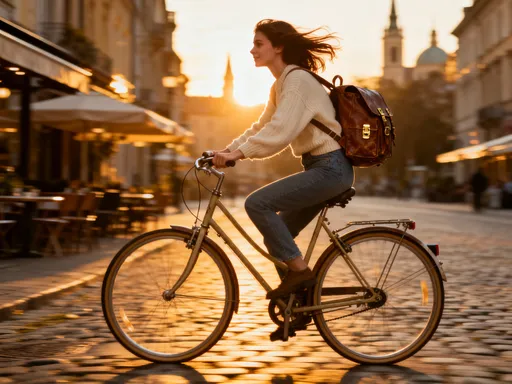
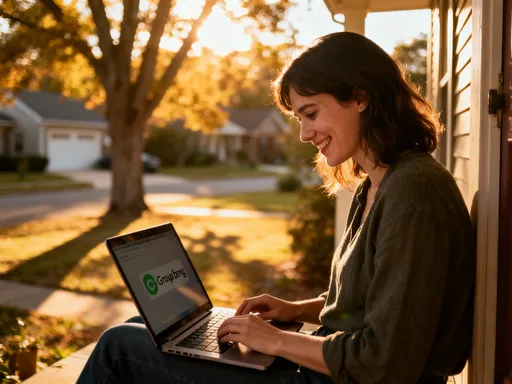
I downloaded it right then. The interface was intuitive—no confusing menus or hidden fees. It showed me exactly where the nearest bikes were, how many were available, and even the condition of each one. I found one just two blocks away. When I got there, I opened the app, scanned the QR code on the handlebar, and heard a cheerful *beep*. The lock released. I gasped—actually gasped—like I’d just performed magic. I adjusted the seat, took a deep breath, and pushed off. The first few seconds were wobbly. My hands gripped the handlebars too tight. But within a minute, I was gliding down a tree-lined avenue, wind in my hair, the city unfolding around me in a way I’d never seen from inside a bus.
What surprised me most wasn’t just the ride—it was the confidence that came with it. The app didn’t just unlock a bike. It unlocked a sense of independence. No more waiting. No more guessing. I could go where I wanted, when I wanted. And the built-in navigation? A game-changer. A small blue line on the screen guided me turn by turn, just like a kind friend whispering directions. I wasn’t just moving through the city—I was learning it, one smooth ride at a time.
From Wobbly Starts to Smooth Rides: Building Confidence One Ride at a Time
The first ride was short—just ten minutes to a café I’d read about. But it sparked something in me. The next day, I went a little farther. Then a little farther the day after. Each ride brought small victories. The first time I confidently crossed a busy intersection. The day I found a quiet garden tucked behind an old church, completely by accident. The moment I realized I remembered the fastest route to the riverfront—without checking the app.
These weren’t just wins on a map. They were wins in my mind. Every time I chose to ride instead of retreat, I proved to myself that I could adapt. That I could learn. That I wasn’t too old, too slow, or too out of shape to try something new. There were still moments of doubt—like the time I took a wrong turn and ended up in a residential neighborhood with no bike docks in sight. But instead of panicking, I slowed down, took a breath, and used the app to find the nearest return station. I even asked a woman walking her dog for directions. She smiled, pointed the way, and said, “You’re doing great.”
That’s the thing about building confidence—it doesn’t come all at once. It grows in quiet moments. In the way your hands steady on the handlebars. In the way you stop apologizing for taking up space. In the way you start to trust your instincts. The bike-share app didn’t just help me navigate the city. It taught me how to navigate uncertainty—with patience, with courage, with grace.
Seeing the City Differently—And Seeing Myself Differently
There’s a big difference between seeing a city from behind glass and feeling it around you. On the bus, everything is muffled—the sounds, the smells, the rhythm of life. But on a bike? You’re part of it. You feel the sun warm one side of your face as you turn a corner. You smell the roasting chestnuts from a street vendor. You hear snippets of conversation, the ring of a bell, the laughter of children in a playground. You notice details: the color of the flowers in a window box, the way the light hits an old stone wall in the late afternoon.
This kind of slow, sensory travel changed how I experienced the city. But more than that, it changed how I saw myself. I wasn’t just a tourist passing through. I was someone who could move through this place with purpose and curiosity. I started to feel like I belonged—not because I knew everything, but because I was willing to learn. I began to take pride in the routes I discovered, the shortcuts I memorized, the parks I found just by following a quiet path.
And that shift in perspective didn’t stay on the bike. It followed me home. I started approaching everyday challenges with more calm. When my internet went out, instead of panicking, I thought, I figured out a foreign city on two wheels. I can handle this. When I had to speak up at a meeting, I remembered how I’d asked for help on the street—and been met with kindness. The bike became more than transportation. It became a metaphor for growth: forward motion, even when you’re wobbly. Progress, even when you take a wrong turn. And the beauty of getting there at your own pace.
The Unexpected Social Side of Solo Rides
You’d think biking alone would feel isolating. But the opposite happened. Because I was visible—out in the open, moving at a human pace—people noticed me. And often, they smiled. A man watering his flowers waved as I passed. A group of kids on bikes called out, “Nice basket!” and I laughed. At a red light, another rider turned to me and said, “First time on these?” I nodded. “You’re doing great,” she said. “Just watch the tram tracks—they’ll catch your wheel if you’re not careful.” I thanked her, and we both rode off, strangers connected by a moment of shared understanding.
These small interactions didn’t change my life. But they warmed it. They reminded me that kindness is everywhere, if you’re open to it. And they showed me that technology, when designed well, doesn’t have to separate us. It can bring us closer. The app got me the bike, but the ride got me the connection. It wasn’t about social media or messaging—it was about presence. About being in the world, open and approachable, and letting life happen around you.
I even started saying hello to other riders. A simple nod, a smile. Sometimes a quick tip: “The dock near the market is full—try the one by the post office.” It felt good to pay forward the help I’d received. And slowly, I began to feel like part of a quiet community—people who chose to move differently, to see more, to feel the wind on their faces instead of sitting behind glass.
How This Simple Habit Improved More Than Just My Commute
At first, I thought I was just finding a better way to get around. But over time, I realized the benefits went much deeper. I had more energy. I slept better. I felt calmer, even on stressful days. There’s science behind this, of course—movement boosts endorphins, reduces stress hormones, improves focus. But I didn’t need a study to tell me that. I could feel it in my body, in my mood, in the way I showed up for my family.
I came home from rides with a clear head and a light heart. I was more present with my kids, more patient with my partner, more engaged in my work. The rhythm of pedaling became a kind of moving meditation—my thoughts untangling with every rotation of the wheels. And the routine itself—the simple act of unlocking, riding, returning—gave me a sense of structure and accomplishment. It was a small habit, but it carried big meaning.
I started to see my rides as acts of self-care. Not extravagant spa days or weekend getaways—just me, choosing to move, to explore, to believe in my own ability to figure things out. Each ride was a quiet promise to myself: I am worth the effort. I am capable. I am growing. And that mindset spilled over into other areas of my life. I took on new challenges at work. I said yes to things I would have said no to before. I even started journaling again—something I hadn’t done in years.
Your Turn: Starting Your Own Journey with Just One Ride
If you’ve ever felt stuck, overwhelmed, or just out of sync with your life, I want to tell you this: it doesn’t take a big change to start feeling different. Sometimes, it just takes one ride. You don’t need special gear. You don’t need to be an athlete. You don’t even need to know the city. Just download a bike-share app—most major cities have one—and look for the nearest bike. Wear something comfortable. Put on a helmet if you can. Take a deep breath, scan the code, and push off.
Yes, the first few minutes might feel shaky. Your heart might race. You might worry about what people think. But keep going. The wobble won’t last. And when you make it to the other side of that intersection, that hill, that moment of doubt—you’ll feel it. A quiet pride. A spark of joy. The beginning of something new.
Think of it not as just a way to get around, but as a way to come back to yourself. To move your body. To see the world up close. To prove, once again, that you are stronger than your fears. You don’t have to ride far. You don’t have to be perfect. You just have to start.
Because sometimes, the bravest thing we can do is step out of our comfort zone—on two wheels, in the open air, with the whole city ahead of us. And who knows? The next time you feel lost, you might just find yourself—pedaling forward, one confident turn at a time.